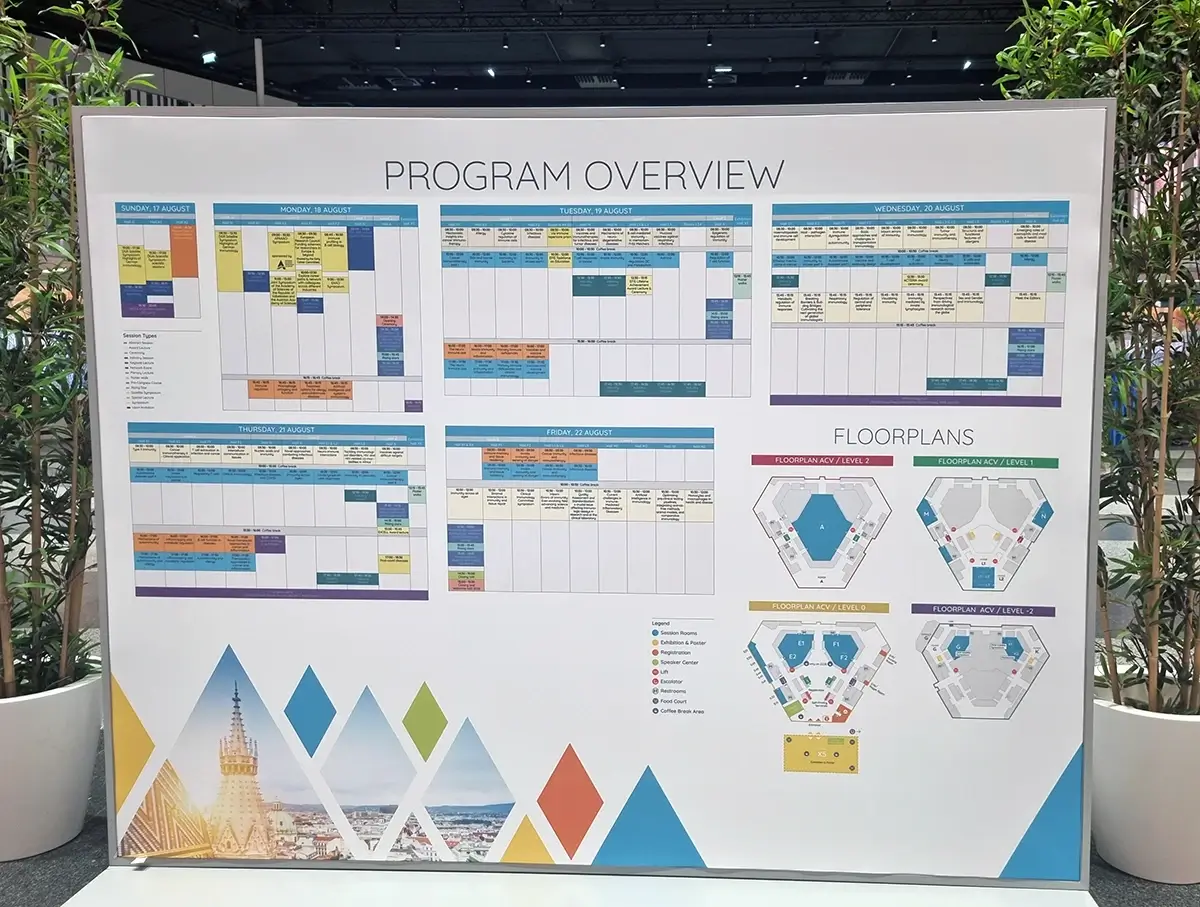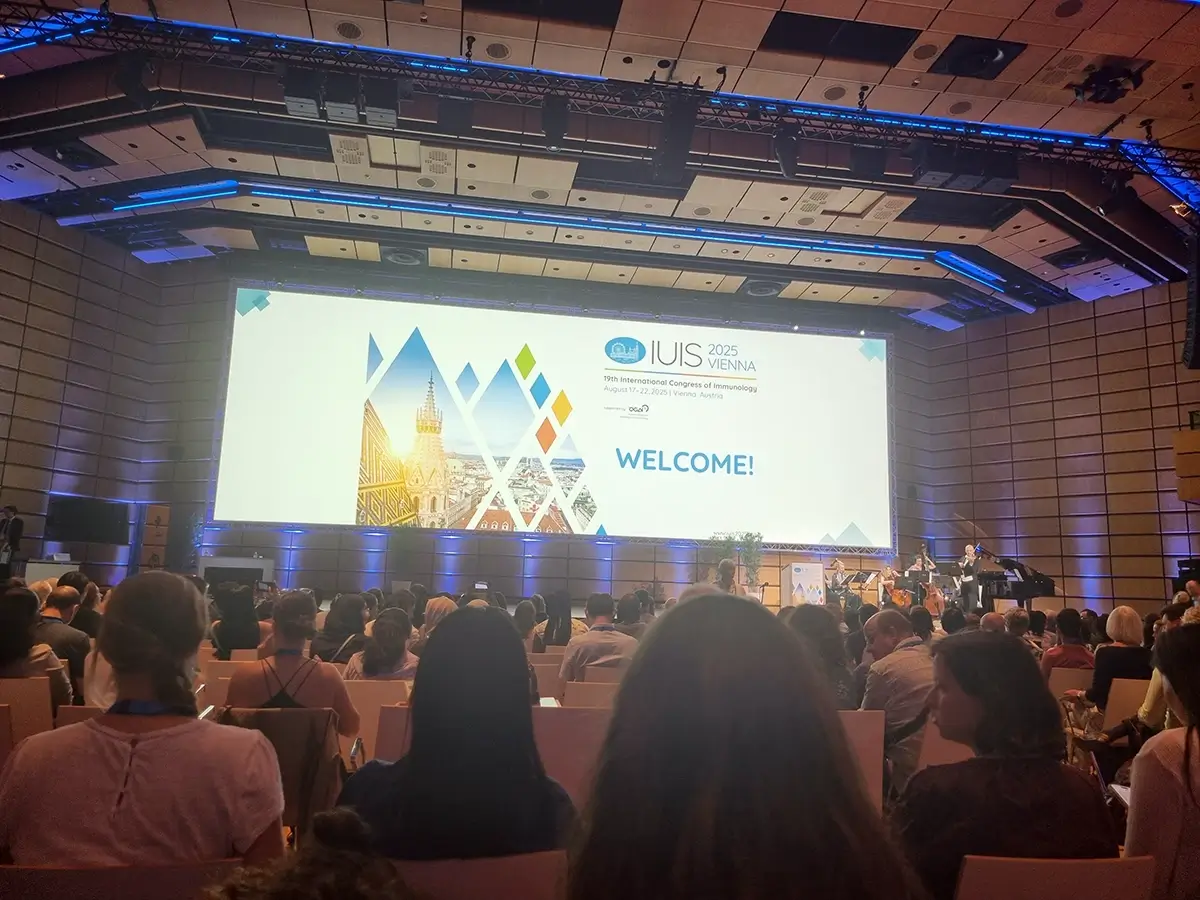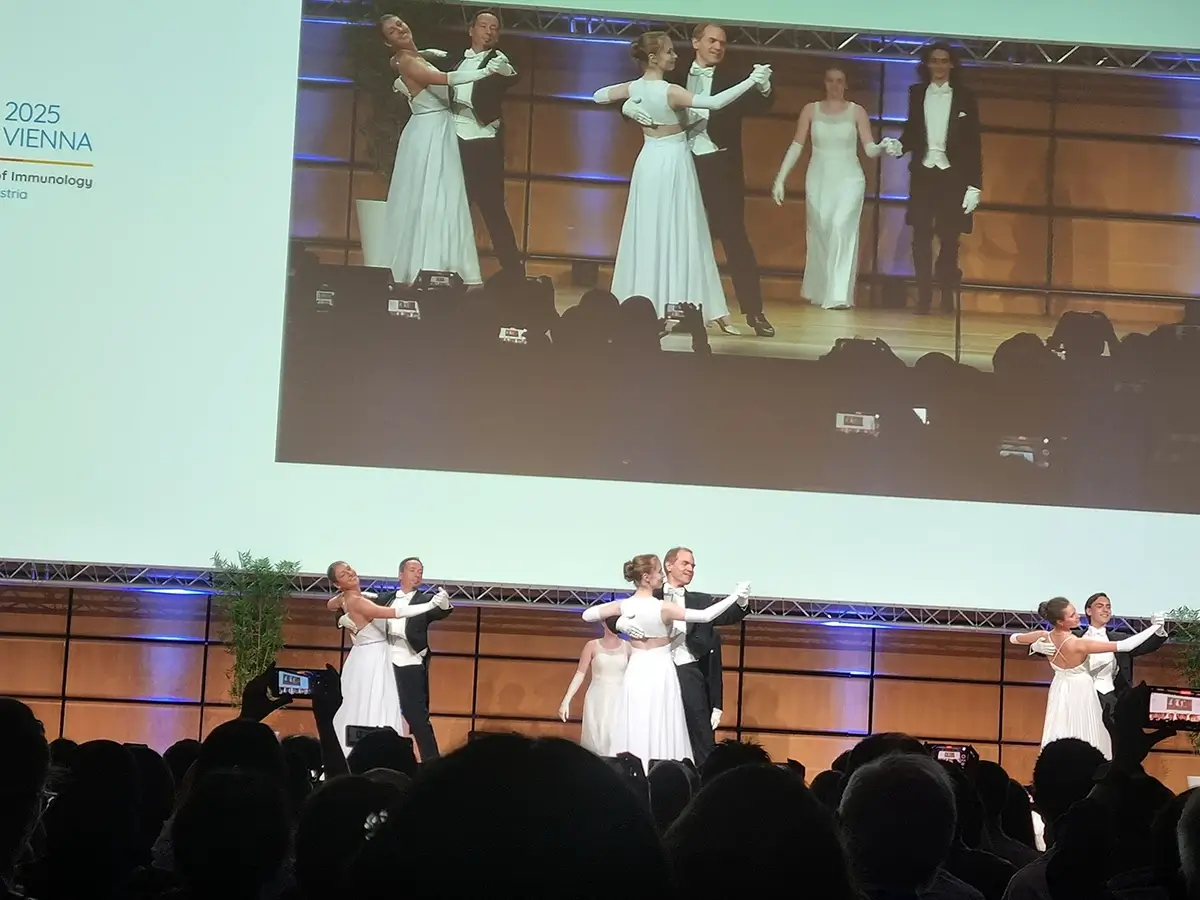
From August 17–22, Cecilia Fahlquist-Hagert had the opportunity to attend the IUIS 2025 Congress in Vienna, one of the largest global gatherings dedicated to advances in immunology. A week-long meeting brought together researchers, clinicians, and industry leaders to discuss cutting-edge developments spanning basic immune mechanisms, disease pathogenesis, clinical translation, and new therapeutic strategies. The participation was made possible by a generous travel grant from the Scandinavian Society of Immunology (SSI), thank you!
Throughout the conference, it was inspiring to see how rapidly the field is progressing, with new technologies and interdisciplinary approaches shaping the future of diagnostics, vaccines, cancer immunotherapy, and immune-mediated disease treatment.
One of the most impactful parts of the program was the dedicated focus on Inborn Errors of Immunity (IEI). Several talks highlighted major advancements in understanding monogenic immune disorders, improved diagnostic pipelines, and emerging targeted therapies. It was particularly interesting to see how large international IEI cohort studies are being carried out, supported by strong global collaboration to share rare patient samples and connect expertise across continents. Discussions around local founder mutations—some appearing at higher frequencies in certain regions—served as a striking reminder of Mendelian inheritance patterns and emphasized the importance of genetic diversity when studying rare diseases and designing effective treatments. These sessions underscored how IEI research not only deepens our basic immunological knowledge but also directly shapes the future of personalized medicine.
The scientific program also featured several thought-provoking keynotes, including lectures delivered by Nobel laureates, who reflected on the milestones that have shaped modern immunology and the challenges that lie ahead. Sessions on emerging immunotherapies, immune profiling technologies, and systems-level analyses provided fresh perspectives across disease areas, while presentations on host–pathogen interactions and autoimmunity highlighted the increasing impact of integrated immune science.
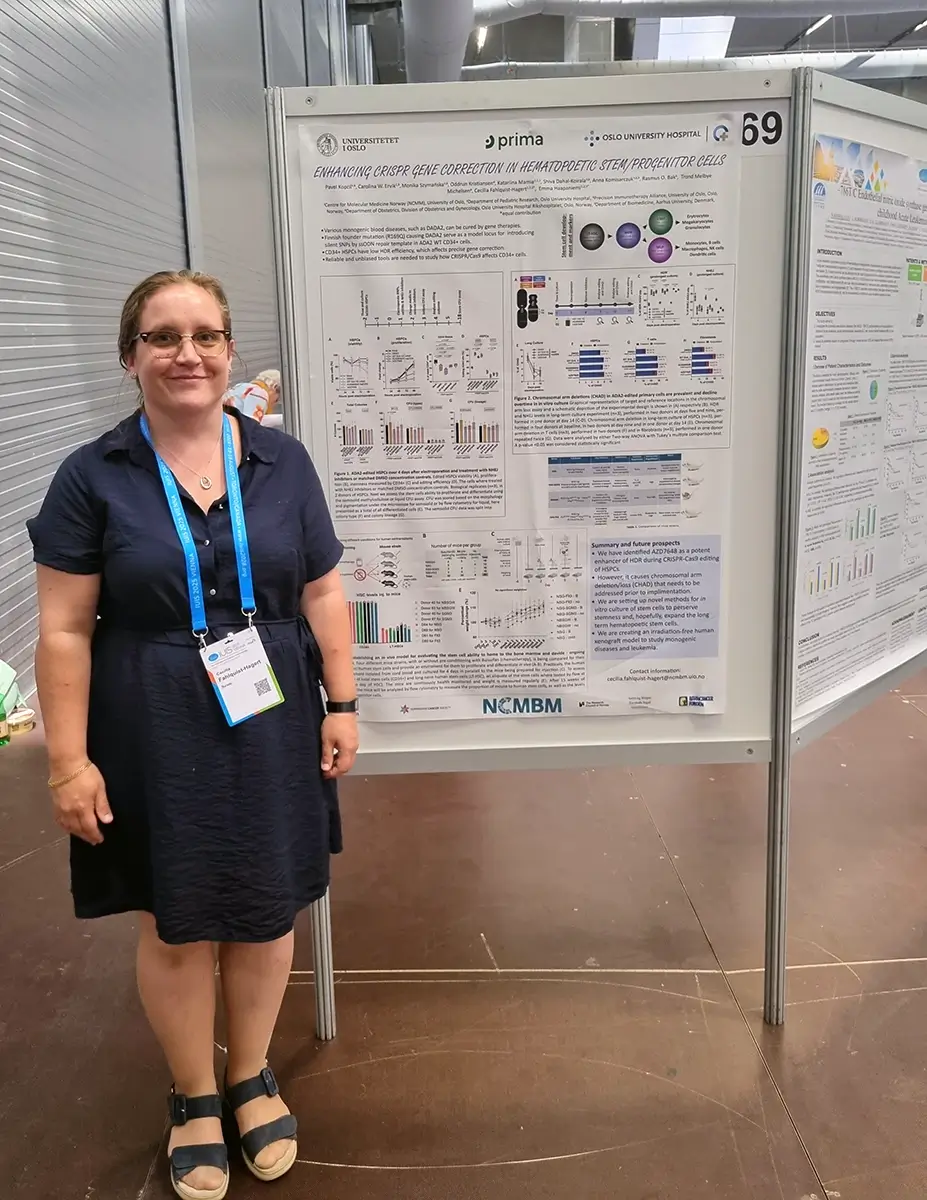
Cecilia also presented her poster (see gallery below), which provided a valuable opportunity to exchange ideas, receive feedback, and connect with scientists from academia and industry. The congress concluded with a vibrant networking reception in central Vienna—a relaxed and enjoyable way to connect with peers and wrap up an inspiring and scientifically rich week.